November 13, 2026
Garage Floor Paint vs. Professional Garage Floor Coatings
Garage floor paint can make a sound concrete floor look cleaner and more uniform. A professional garage floor coating includes a different scope of work: preparing the slab, addressing surface imperfections, and installing several layers that work together. Which option makes sense depends on how you use the garage, what’s already on the floor, and how much preparation the concrete needs.
If you’re comparing a can of garage floor paint with a professional estimate, start with the slab. The finish you see is only one part of the job. An older floor with oil spots, peeling paint, or patched areas can take more work to prepare than a clean, bare slab, whichever finish you choose.
Garage Floor Paint vs. a Professional Coating at a Glance
| What to compare | Garage floor paint | Flohr’s professional garage floor coating |
|---|---|---|
| Best fit | A straightforward color refresh on suitable concrete | A finished floor for a garage that sees regular parking, storage, or workshop use |
| Surface preparation | Clean and prepare the slab according to the product instructions. Priming or etching may be required. | Evaluate the concrete, diamond-grind hard-troweled surfaces as needed, and prepare surface imperfections before coating. |
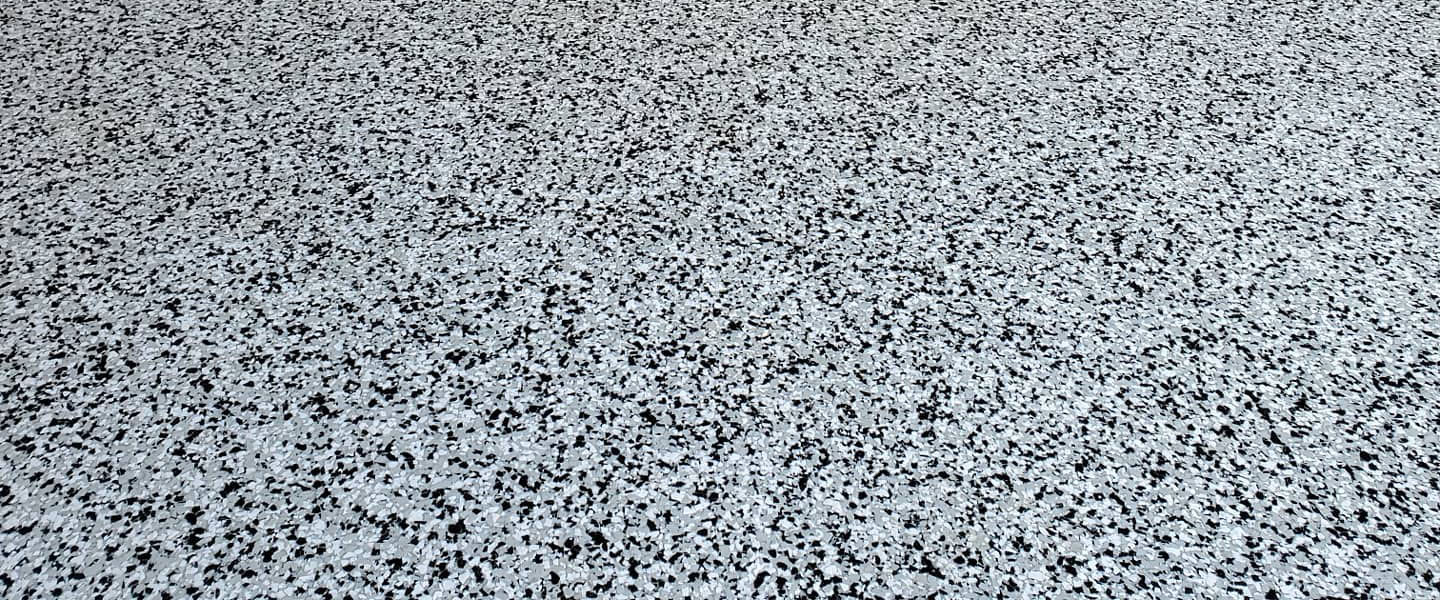
| Finish | Typically a solid color, with options that vary by product | Epoxy layers, decorative color chips, and clear polyaspartic urethane topcoats |
| Cost | Lower upfront material cost. Budget for prep supplies, tools, and your time. | The estimate includes labor, prep, and the installed coating system. Slab condition and floor area affect the scope. |
| Return to use | Follow the product’s separate instructions for foot traffic and parking. | Plan around the installation and the cure time Flohr provides for your floor. |
What Counts as Garage Floor Paint?
Garage floor paint is a finish formulated for concrete floors. Many products come ready to apply with a roller. Some are labeled one-part epoxy paint, which generally means you can apply the product without mixing a separate hardener. Read the full label, including the instructions for bare or previously painted concrete, to understand what the product requires.
Paint can make sense if the concrete is in good shape, you want a uniform color, and you’re comfortable clearing the garage and doing the preparation yourself. If you park in the garage, check that the product is rated for vehicle traffic and look up the wait before parking. A floor can feel dry to the touch while it’s still curing.
You may also see two-part epoxy kits alongside floor paint. A kit is a separate option with its own mixing instructions, working time, and surface preparation requirements. If you’re comparing one with a professional estimate, look at the full scope on both sides, from removing old material to applying the final coat.
Why Concrete Preparation Matters
Two garage floors that look similar from the doorway can need very different prep. One might be bare concrete with a smooth, hard-troweled finish. Another might have a clear sealer or old paint that has worn off in the tire paths. Both need a surface the new finish can bond to, and the condition of the slab determines how we get there.
Old Paint and Sealer
Look at the tire paths, the floor just inside the garage door, and the perimeter along the walls. A finish may look intact in one area and be peeling in another. Applying a fresh coat over loose paint leaves it bonded to a layer that’s already coming away. During an estimate, point out where the finish has lifted and mention any previous coatings or sealers you know about.
Oil Spots, Cracks, and Surface Wear
Tell us where vehicles have leaked or where previous repairs have reopened. Oil contamination may require extra preparation. Small surface imperfections may be addressed before coating, while a crack that keeps reopening or a section that has shifted calls for a closer look at the slab. If moisture repeatedly appears in the same area, mention when you see it so it can be evaluated before a finish is selected.
Smooth Concrete
A hard-troweled floor can look clean and still be too smooth for the coating system. Flohr uses diamond grinding to prepare these surfaces. That step helps create the surface profile the coating needs to bond. If you’re comparing installation quotes, ask how each contractor plans to prepare your floor and which prep work is included.
How Flohr Coatings Finishes a Garage Floor
- Prepare the slab. We evaluate the existing floor and grind hard-troweled concrete as needed. We clean the prepared surface and let it dry before applying the system.
- Address surface imperfections. We hand-trowel a cement-based layer to fill suitable imperfections and prepare the floor for the epoxy layers.
- Build the epoxy and color-chip finish. We apply two epoxy coats and broadcast decorative chips into the second. Once the excess chips are removed, the floor is ready for the clear finish.
- Apply the clear topcoats. Two coats of clear polyaspartic urethane seal the chip finish. We’ll tell you when you can walk on the floor and when you can park on it.
See the garage floor layers in our concrete coating process.
Which Finish Fits the Way You Use Your Garage?
Think about what happens on the floor during a normal week. If you mainly use the garage for boxes, lawn tools, and occasional projects, a painted floor may meet your needs. Factor in the work involved in moving everything out, prepping the slab, and waiting for the finish to cure before you reload the space.
If you park two cars every day, use the garage as a workshop, or want it to feel like a finished part of the house, it’s worth comparing a professionally installed coating. Consider where the tires sit, where you roll a toolbox, and how often you clean up drips or track in rain. Bring those details to the estimate so we can discuss finish and texture for the way you actually use the space.
Compare the full cost of both projects. For paint, count the supplies and equipment you’ll need to prepare the floor as well as the paint itself. For a professional quote, ask what it includes for removing old coatings, addressing surface imperfections, and installing the finished system. Ask for the date you can park again when you compare schedules. That’s usually the timing that matters most to a household that uses the garage every day.
Frequently Asked Questions
Can I paint over an already painted garage floor?
That depends on the condition of the existing paint and the instructions for the new product. A peeling or flaking finish needs attention first. If the old coating is sound, check whether the new product is compatible and what cleaning or surface prep the manufacturer calls for.
Why does garage floor paint sometimes peel where the tires sit?
The tire paths get repeated pressure and wear, and warm tires can contribute to lifting a finish that has poor adhesion or hasn’t fully cured. If paint is already peeling in those areas, show the installer where it started and how soon it happened after painting. That information can help guide the preparation.
How long before I can park on a professionally coated garage floor?
Flohr’s published process lists about one day before foot traffic and three days before driving on the finished floor. Confirm the timing for your project before moving vehicles, cabinets, or heavy equipment back in. View Flohr’s garage floor coating process.
Can a professional coating cover old stains and patches?
A decorative chip finish can give a prepared floor a more consistent appearance. We still evaluate what caused the stains and whether the patches are sound. Deep oil contamination, loose patch material, and recurring cracks may affect what’s needed before coating.
Get an Estimate for Your Garage Floor
If you’re deciding between painting your garage floor and having it professionally coated, start with an onsite look at the concrete. Flohr Coatings serves Huntsville, Madison, Hampton Cove, Owens Cross Roads, Guntersville, and nearby North Alabama communities. We’ll look at what’s on the slab, explain the prep it needs, and talk through finish options and how long the garage will be out of use.
Explore Flohr’s garage floor coatings or request a free onsite estimate.
