November 2, 2026
Can You Resurface an Old Concrete Pool Deck?
Yes, many old concrete pool decks can be resurfaced. If the slab is stable and there’s sound concrete to bond to, a decorative overlay can give it a fresh color, pattern, and texture while keeping the existing deck in place. Fading, stains, a worn finish, and some shallow surface damage are all reasons to look into resurfacing.
The condition of the concrete matters more than its age. A deck that looks rough after years of use may still be a good candidate. A cleaner-looking deck with sections that have shifted or settled may need repair before it can be coated. Here’s what to look for and what we check when we evaluate a pool deck in the Huntsville area.
When Does Resurfacing Make Sense?
Resurfacing is worth considering when you’re happy with the layout around the pool and the main problems are at the surface. Maybe the finish has faded unevenly, old patches stand out, or the original color no longer works with the patio and landscaping. A decorative overlay lets you update the look across the deck while keeping the layout you already use.
Peeling paint, a flaking coating, or concrete that’s shedding small chips needs a closer look. The first question is what’s underneath. If the damage is shallow and there’s solid concrete beneath it, we may be able to remove the loose material and prepare the slab for a new finish. When deterioration runs deeper or affects large areas, we’ll talk through what the concrete needs before you choose a coating.
What We Check Before Coating a Pool Deck
Cracks and Uneven Sections
We look at where cracks run, whether they’ve reopened after previous repairs, and whether one side sits higher than the other. A fine crack in an otherwise stable section can be a different situation from a crack that runs through a sunken slab. Even after a crack is treated, continued movement in the concrete can cause a visible line to reappear through the new surface.
Tell us if you’ve noticed a crack widening or a section dropping over time. That history helps us assess what’s happening beneath the finish and discuss whether the slab needs attention first. You can read more about how we address cracks in our concrete coating FAQs.
Paint, Sealer, and Previous Coatings
If the deck has already been painted, sealed, or coated, we look at how well that material is holding and what it will take to prepare the surface. The new overlay needs a sound surface it can bond to. Loose material has to come off. A slick or previously sealed deck may need diamond grinding to expose the concrete and prepare it for coating.
If you know what was applied or have an invoice from the last resurfacing job, bring it to the estimate. Even knowing which areas were patched or when the finish first started peeling can help.
Low Spots and Drainage
Take a look around the deck after a rain or a day at the pool. Does water regularly collect near the coping, at the bottom of the steps, or where the deck meets the patio? Point out those spots during the estimate. If the deck’s slope or a settled section is causing water to collect, that issue may need separate work before resurfacing. It’s much easier to make that decision before the new finish goes down.
What Does Pool Deck Resurfacing Involve?
Once we’ve looked over the concrete and confirmed it’s suitable, we can talk through color, texture, and how much of the surrounding area you want to update. Some homeowners choose to include a connected patio or walkway so the transition between spaces feels intentional.
- Prepare the existing concrete. We remove loose material, clean the surface, and grind it where needed. How much preparation is involved depends on the condition of the slab and what has already been applied to it.
- Apply the Resiflex overlay. We build up the resurfaced finish with hand-troweled base coats and a textured top coat. Colored quartz can add variation and depth to the finish.
- Seal the finish and let it cure. We seal the finished surface and give you instructions for your project, including when you can walk on the deck, return the furniture, and start using the pool area again.
If you’re planning around a pool opening, a gathering, or other work in the backyard, tell us when you request an estimate. We can discuss how preparation, weather, and curing time fit into your schedule. See our concrete coating process.
Choosing a Finish for a Deck That Gets Wet
Think about where people actually walk around your pool. The path from the ladder to the back door, the area beside the steps, and the route between the pool and seating often see more wet foot traffic than the rest of the deck. These are good areas to discuss when choosing a texture. Around a pool, the finish needs to feel comfortable under bare feet and provide useful grip. Keep in mind that any wet surface can be slippery.
When comparing colors, look at samples next to the coping and any concrete or brick that will stay in place. Check them in both sun and shade if you can. If you’re considering a pattern, look at the entire deck from the patio or back door as well as up close. A finish that looks busy on a sample may read differently across the deck, especially when it’s bordered by coping or landscaping.
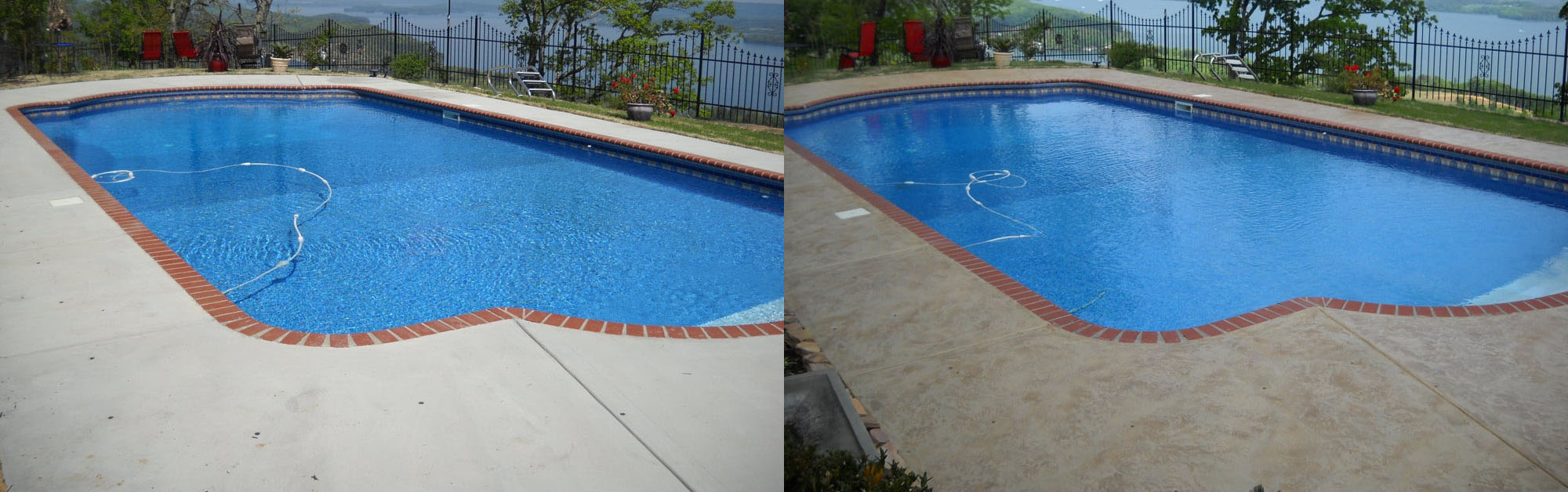
For an example on an actual pool deck, see the Swimming Pool Deck comparison in our Before & After Gallery. Drag the slider to see how the finished surface changes the look of the space around the pool.
Frequently Asked Questions
Can a pool deck with cracks be resurfaced?
Some cracked decks can be resurfaced after preparation and appropriate repairs. The decision depends on the condition of the concrete and whether it’s still moving. If a crack has opened again after patching or the concrete has shifted on one side, have the slab evaluated before choosing a finish.
Can you resurface a pool deck that has already been coated?
Possibly. We need to check how well the old coating is bonded and whether it can be prepared or needs to be removed. A peeling or loose finish needs to come off so we can work from a sound surface.
Do I need to drain the pool before resurfacing the deck?
The work is on the concrete around the pool. Ask during your estimate how we’ll handle the pool edge and whether anything about your layout or project scope requires changes to the water level or pool access.
How much does it cost to resurface a concrete pool deck?
The estimate depends on the area being coated, the amount of prep the slab needs, and the color or pattern you choose. An older finish that needs removal can change the scope, as can adding an adjoining patio or walkway. An onsite estimate lets us account for those details.
Find Out What Your Pool Deck Needs
If the concrete around your pool is faded, patched, or peeling, an onsite evaluation can help you decide whether to resurface it. Flohr Coatings serves Huntsville, Madison, Hampton Cove, Owens Cross Roads, Guntersville, and surrounding North Alabama communities. We’ll look at the slab, explain what preparation it needs, and talk through finishes that suit the way you use your pool area.
Explore our swimming pool deck coating options or request a free onsite estimate.
